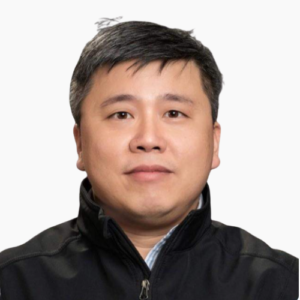
Ye Che
Senior Director, Global Head of Protein Structure & Biochemistry GSK
Ye Che is an R&D leader with 20+ years of experience translating complex biology into clinical impact through rigorous, structure-guided design. Working at the intersection of computational science, medicinal chemistry, structural biology, and protein biochemistry, Ye builds design engines that turn mechanism into medicines. Across a career spanning 20+ clinical candidates, Ye has helped advance three FDA-approved therapies with global reach, including ABRYSVO® (RSV vaccine), COMIRNATY® (COVID-19 mRNA vaccine), and LITFULO® (Ritlecitinib), enabled by deep expertise in structure-based design. Today, Ye leads Protein Structure & Biochemistry at GSK, directing a global multidisciplinary team across antigen and antibody discovery, structural biology, mass spectrometry, protein biochemistry, early formulation, and computational sciences to prospectively design immune outcomes and deliver high-value clinical candidates efficiently.
Seminars
- Learn how structural biology enables the identification and design of stable, immunogenic epitopes, using technologies like cryo-EM and X-ray crystallography to tailor antigens that can trigger robust immune responses
- Discover how vaccine candidates are designed by optimizing antigen structures, addressing challenges like antigenic variation, and focusing on conserved regions to enhance broad protection against evolving pathogens
- Explore how structural insights are leading to the design of vaccines against “undruggable” or challenging targets, where understanding protein folding and conformational flexibility is key to developing novel immunogens
- Assessing the limitations of structure prediction methods such as AlphaFold and exploring how moving beyond static models to dynamic systems can improve protein design outcomes
- Examining how cryo-EM data and co-folding models can be combined to enhance prediction of multi-component interactions in complex biologics
- Understanding what drives the gap between structural accuracy and functional performance, and how to better translate in silico designs into biological activity